
Tigress T-111 walks the same sandstone path her grandmother walked. Some thrones, you inherit.
Ranthambore in the dry season has a particular smell: hot stone, old leaf, the powder of the lake-edge dust under the wheel. By the first week of May the deciduous forest has gone ochre and grey-green; the grass on the lake margins has been beaten down to a low straw; the air at noon shimmers above the sandstone. The tigers, sensibly, have moved closer to water.
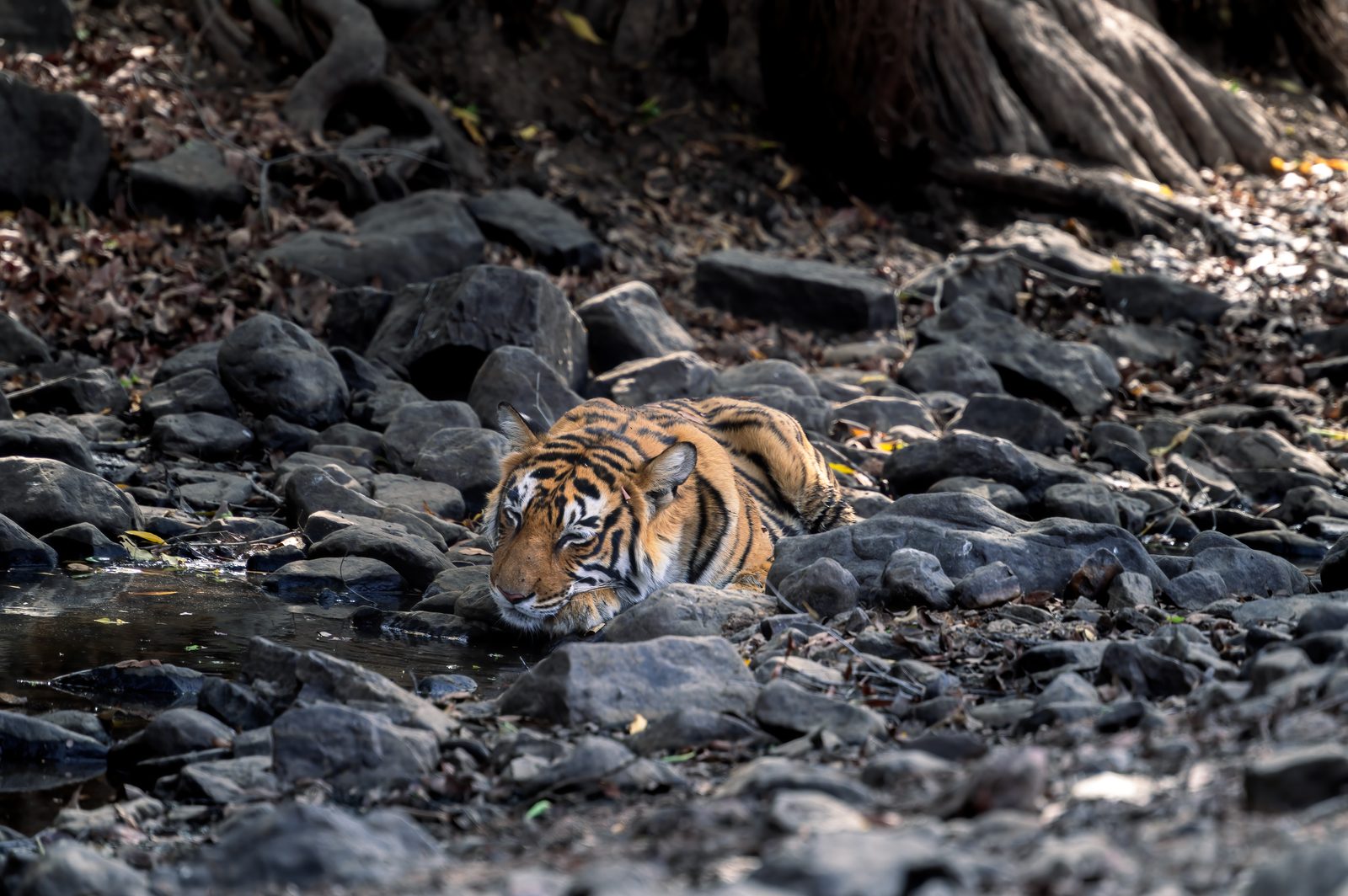
T-111 Shakti
We are in zone three. Our driver — a small man with very still hands — has been working these zones for nineteen years, and when he stops the jeep on a particular stretch of forest road and switches the engine off, you switch off too. Two minutes pass. Three. Then a crow rasps once, and a Spotted Deer in the middle distance freezes, and our driver lifts his chin — a fraction of a movement — and there she is.
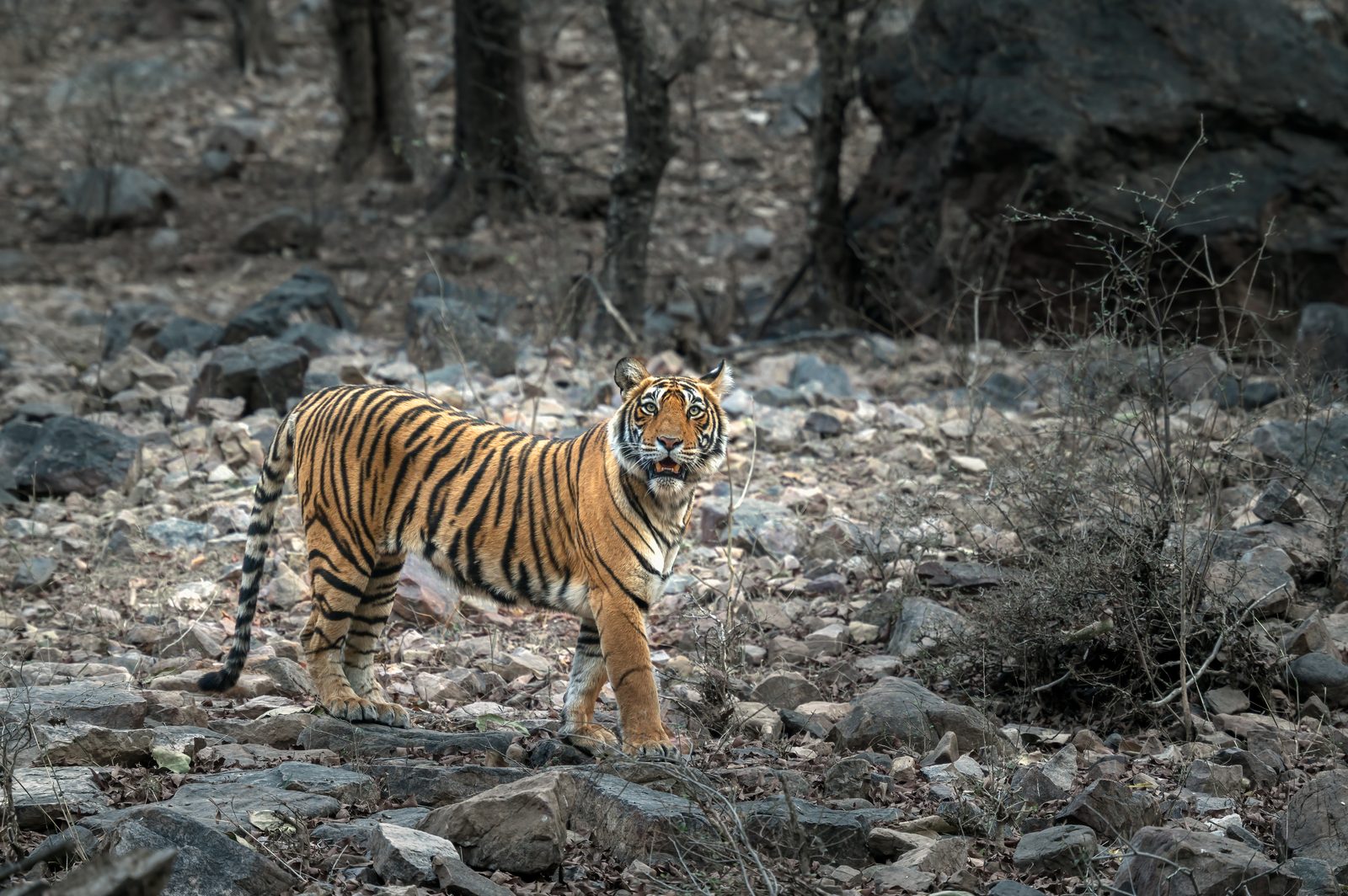
Tigress T-111. Local name: Shakti. She comes out of the lantana the way tigers come out of cover, which is to say she does not come out at all — the cover simply ceases to be there, and the tiger is. She is enormous. She is in no hurry. She walks, slowly and exactly, down the path our jeep is parked in, looks at us once with that level, depthless tiger glance, and continues past — close enough that you can hear her breathing.
A wild tiger, at fifteen feet, is not a photograph waiting to happen. It is a long, slow correction of how you thought the world was arranged.

The water and the heat
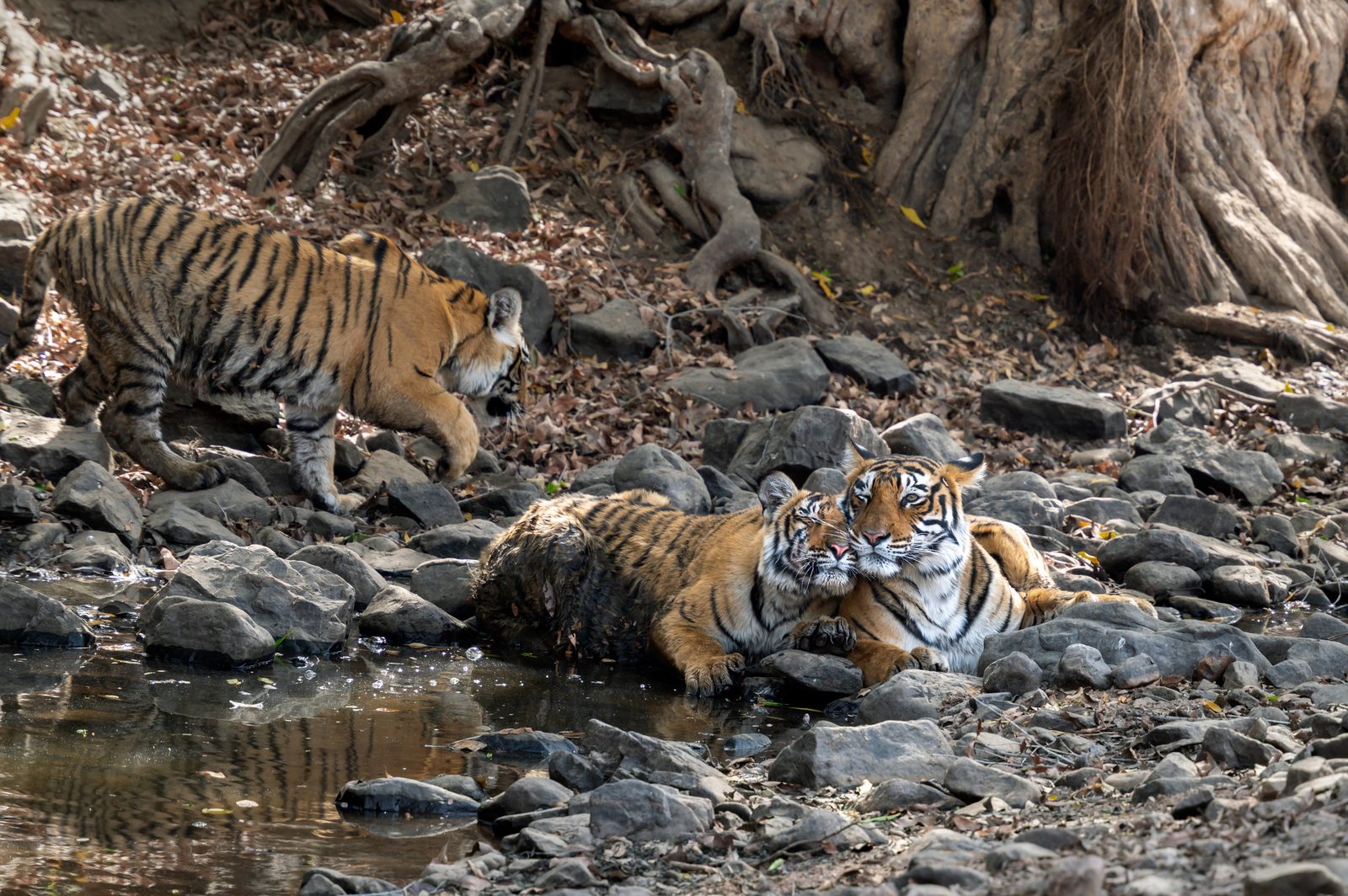
Half an hour later, we find her again, lying in the shallow stone pool below the old fort wall — only her head and the first quarter of her back above the water, eyes half-closed. She lies there for nearly forty minutes. We do not move. The forest around us breathes. A Crested Serpent Eagle, miles away, calls twice. A peacock, somewhere on the fort, calls back.
Siddhi and Noori
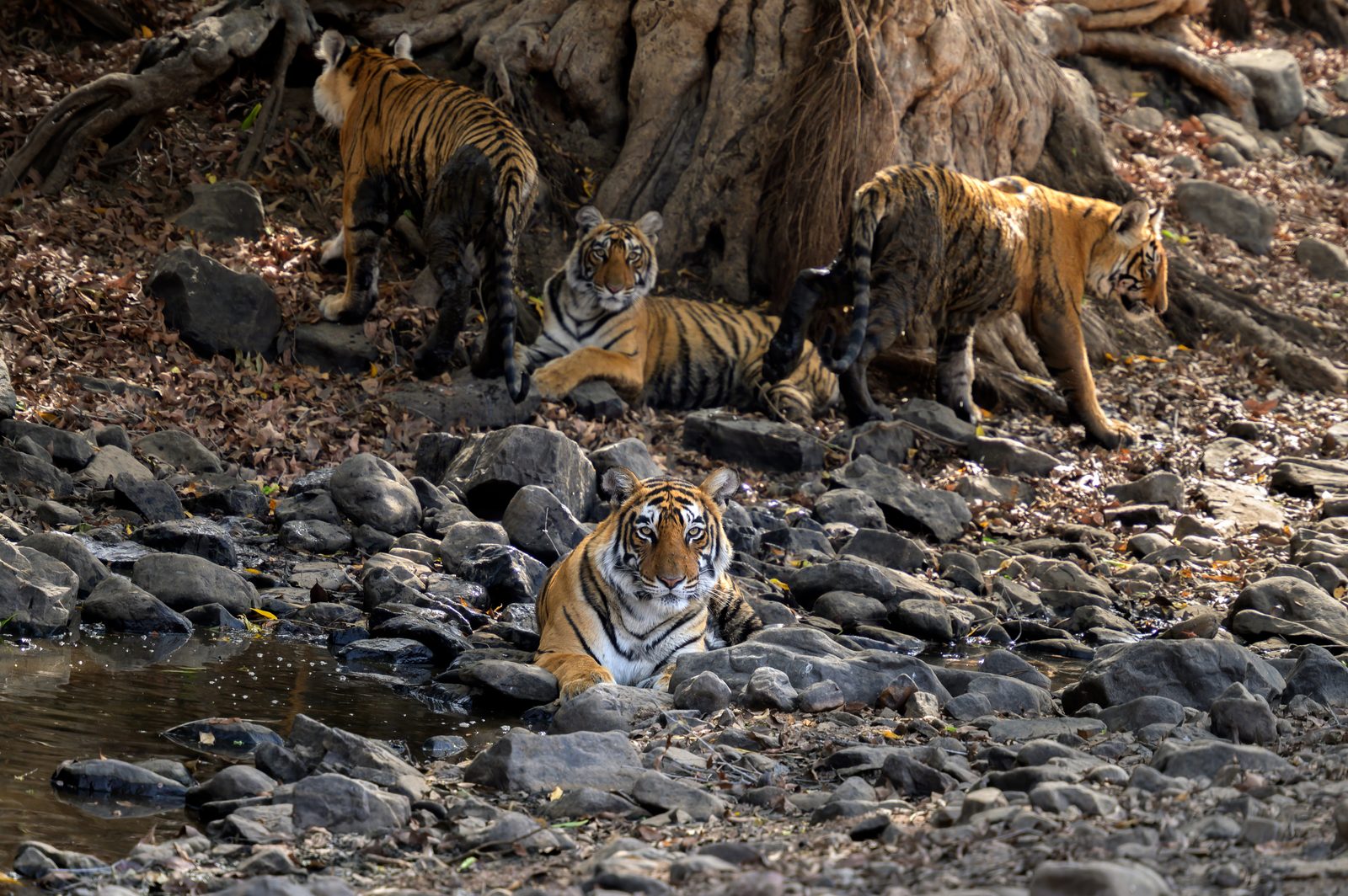
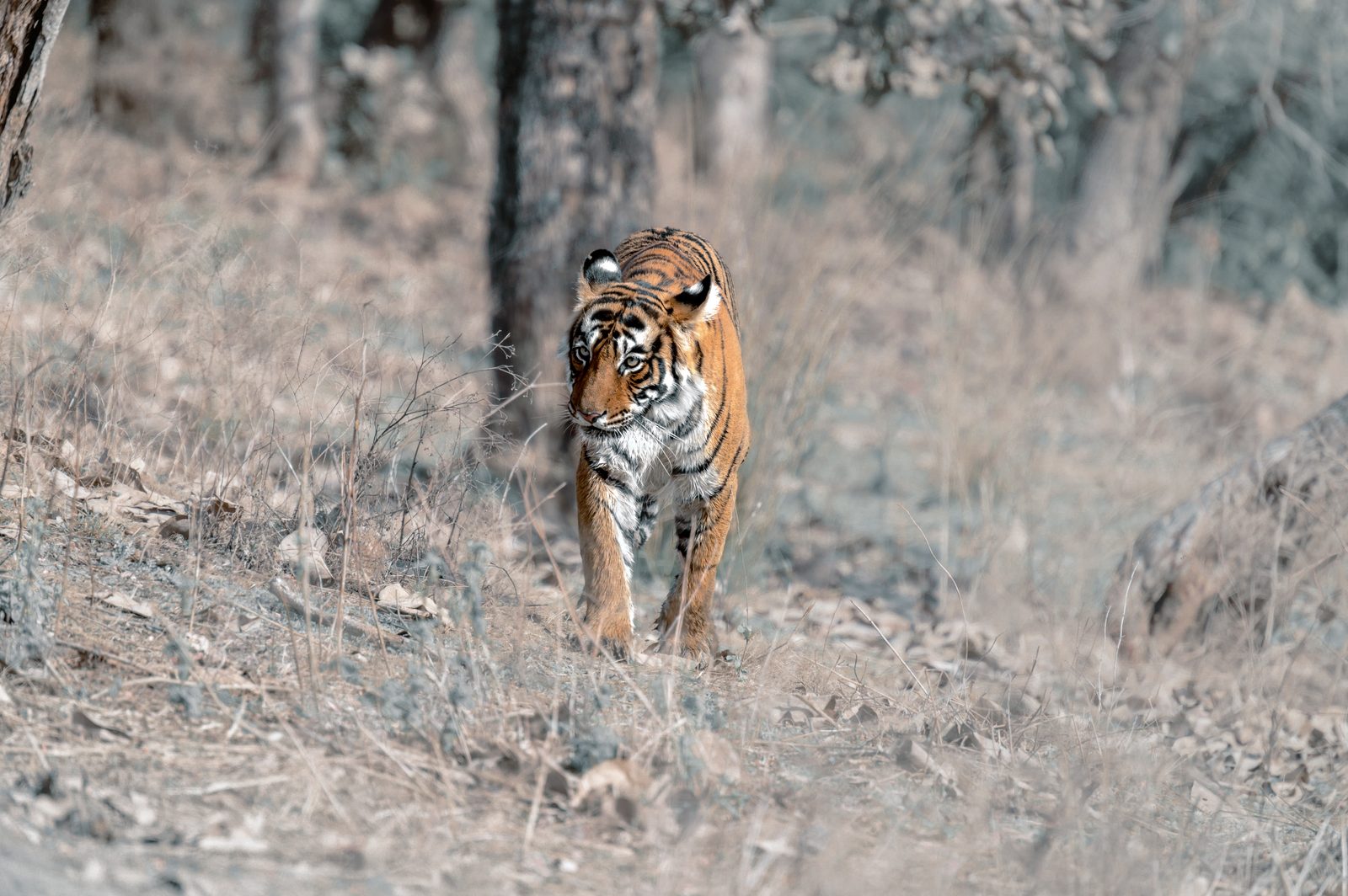
Over the next four drives, we photograph two more tigers. T-125, locally Siddhi — younger, leaner, more wary — across a fallen tree at first light. T-105, Noori, on a dust road in the late afternoon, walking the way only mothers walk: economically, without looking back, certain that whoever is behind her will keep up.
What it felt like
Ranthambore is, for many travellers, the first place they ever see a wild tiger. There is no preparation for it — not really. The fort towers above the forest like an old idea; the lake reflects the same sky it has reflected for a thousand years; and somewhere in the lantana, a queen who has inherited her path from her mother, who inherited it from hers, walks out into the morning and lets you take her photograph.
We drove out the last evening with the sun behind the fort, the lake gone pink, and the dust off our tyres lifting up into the same hot air the tigers were breathing. Some places stay with you the way smells stay with you. Ranthambore in the dry heat is one of those.

Want to walk this trail?
Ranthambore Tiger Safari
If this story made you want to plan a similar journey, send me a quick message on WhatsApp. I'll come back with dates, a vehicle plan, and a quote tailored to your camera and your calendar.