
A floodplain in the cold dry season — rhinos in elephant grass, fish eagles, and the slow turn of a great river.
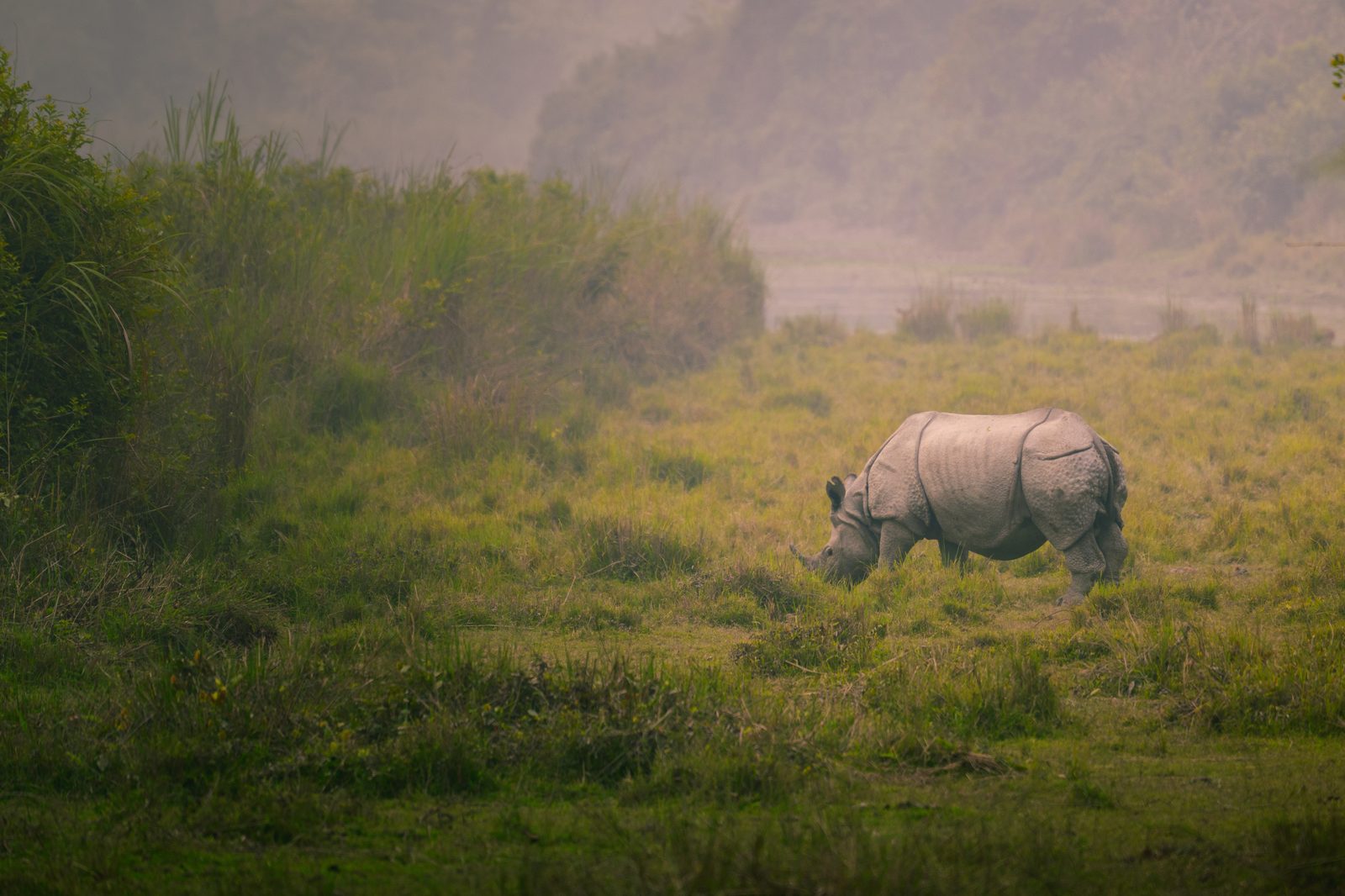
Kaziranga is, before anything else, a floodplain. The Brahmaputra has been writing it in mud and silt for ten thousand years; every monsoon, the river rearranges the park's geography; every dry season, the grass comes back, taller than a man, and the rhinos return to graze through it. By February the floodwater is gone, the grass is silver-gold, and the cold mornings carry mist off the river that does not lift before nine.
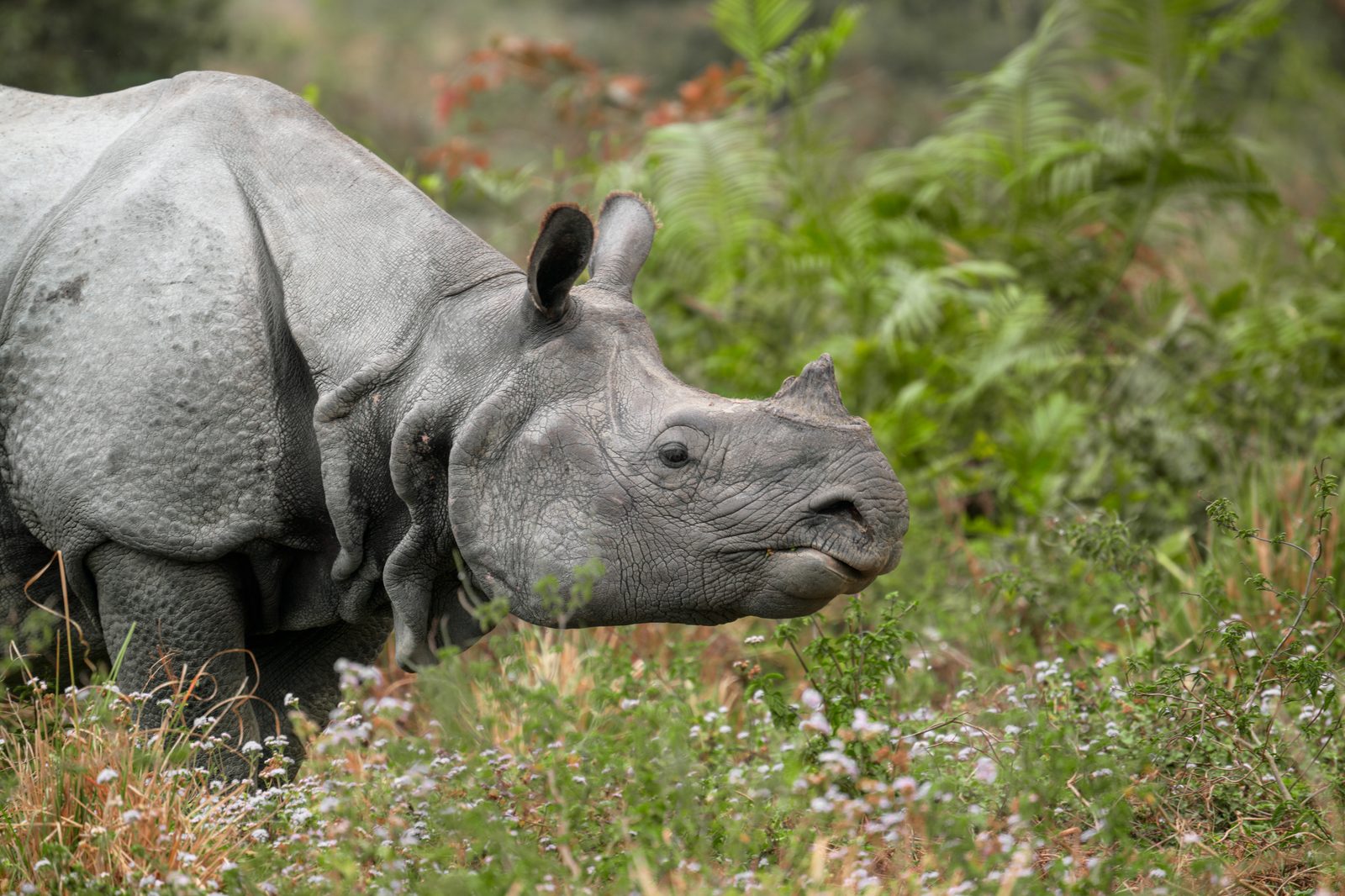
The first rhino
Our first drive was the central range, well before sunrise. The first rhinoceros came up out of a dip in the grass perhaps a hundred metres ahead — the sheer scale of him is the part you cannot anticipate. The Greater One-horned Rhinoceros stands six feet at the shoulder; the armour-plate skin is the colour of wet cement; the single horn — sometimes broken, sometimes worn — is a piece of structural folklore. He was unhurried. He grazed for ten minutes, then walked, on legs the size of small tree-trunks, into the next dip in the grass and disappeared.
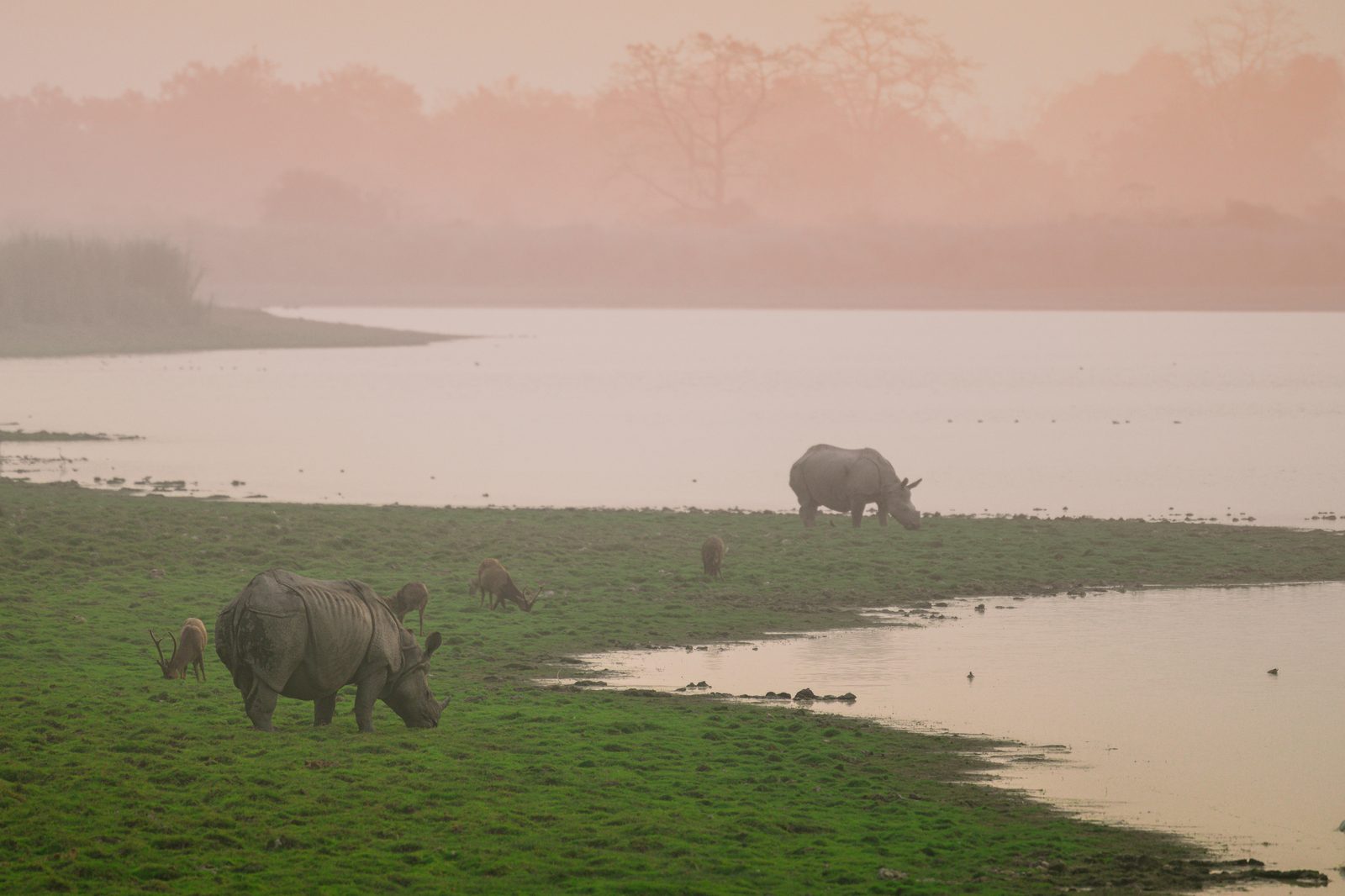
Birds of the floodplain
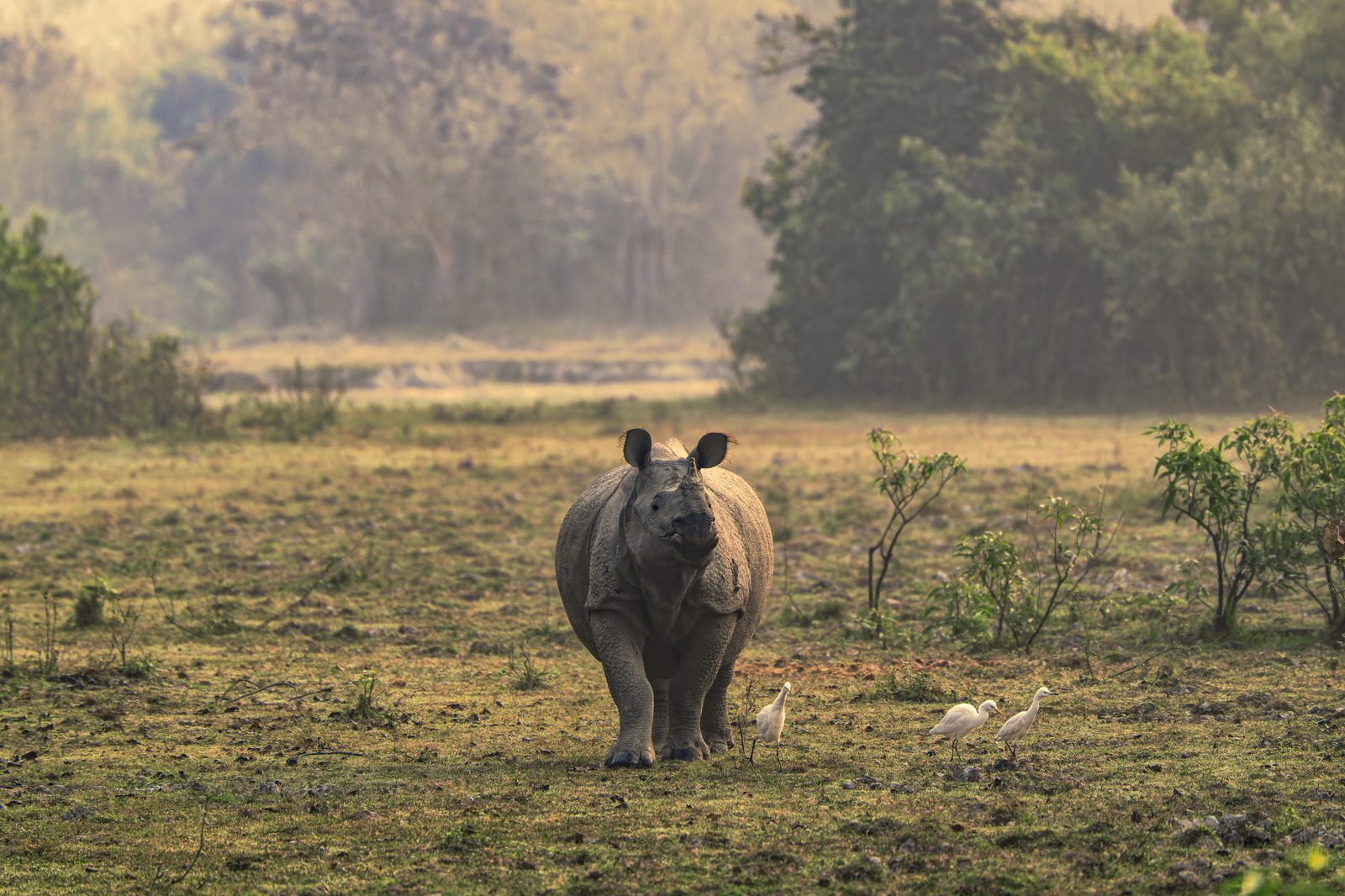
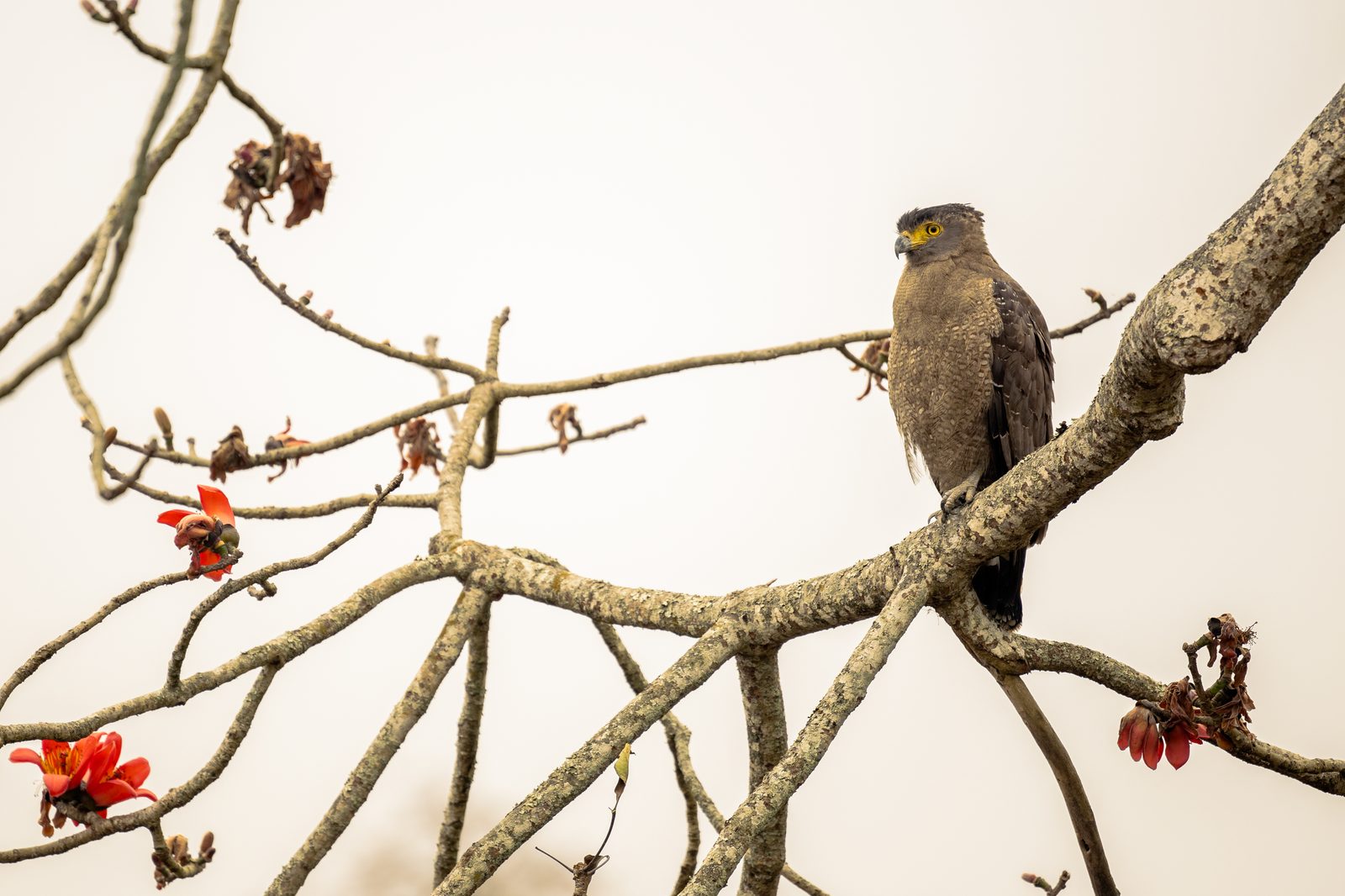
Kaziranga is one of those places where you start out expecting one thing and end up writing your trip report about another. The bird life is staggering: Pallas's Fish Eagles on dead snags above the river-channels; Bengal Florican working the open grass at dawn; Lesser Adjutants stalking through the wet patches like grim, scientific undertakers; flocks of Bar-headed Geese pulling in from the north.
The river itself
On the last morning we did the optional Brahmaputra river-bend boat — three hours, slowly, against a current that has been running since the Ice Age. The mist did not lift until well after eight. When it did, it lifted on Gangetic dolphins surfacing in slow, almost private rotations, and on the absurd reach of the river itself: water to the horizon in three directions, and somewhere on the far bank, a fishing eagle on a snag, reading the same surface we were.
Kaziranga is not a 'park' in the way Ranthambore or Kanha are parks. It is, more accurately, a piece of pre-modern earth that the modern world has agreed, for now, to leave alone. The rhinos are part of that. The grass is part of that. The river is part of that. Photographing it is, at best, a way of saying thank you for being allowed to look.
Want to walk this trail?
Kaziranga & Brahmaputra
If this story made you want to plan a similar journey, send me a quick message on WhatsApp. I'll come back with dates, a vehicle plan, and a quote tailored to your camera and your calendar.